What Does 22 Years of Digging Up the Past Look Like in Plano?
The 22nd annual Plano Archaeology Fair returns to Haggard Park on Nov. 7, bringing flintknapping, Native American performances, and hands-on history.
The 22nd annual Plano Archaeology Fair returns to Haggard Park on Nov. 7, bringing flintknapping, Native American performances, and hands-on history.
Most North Texas cities build their civic identity around the new — the latest mixed-use development, the freshest restaurant concept, the most recently planted corporate campus. Plano does that, too. But for 22 consecutive years, the city has also made room for a very different kind of public gathering: one dedicated to the people who were here long before the highways and subdivisions, and to the science that helps us understand them.
The 22nd annual Plano Archaeology Fair takes place Saturday, November 7, from 9 a.m. to 3 p.m. at Haggard Park, 901 E. 15th Street. Admission is free, the programming runs all morning and into the afternoon, and the intended audience spans every age group. That combination — longevity, accessibility, and genuine educational depth — is worth examining on its own terms.
The question is reasonable. For many people, archaeology conjures either a dusty academic conference or a cinematic adventure neither of which maps onto a Saturday morning in a Plano park. The reality at Haggard Park lands somewhere more grounded and, arguably, more interesting.
The fair centers on two primary draws. The first is Native American performances, which give visitors a living cultural context for the prehistoric material the fair otherwise presents through artifacts and demonstration. These performances are not a fringe element of the program; they are a deliberate anchor, connecting the deep past of this region to communities whose descendants are still present.
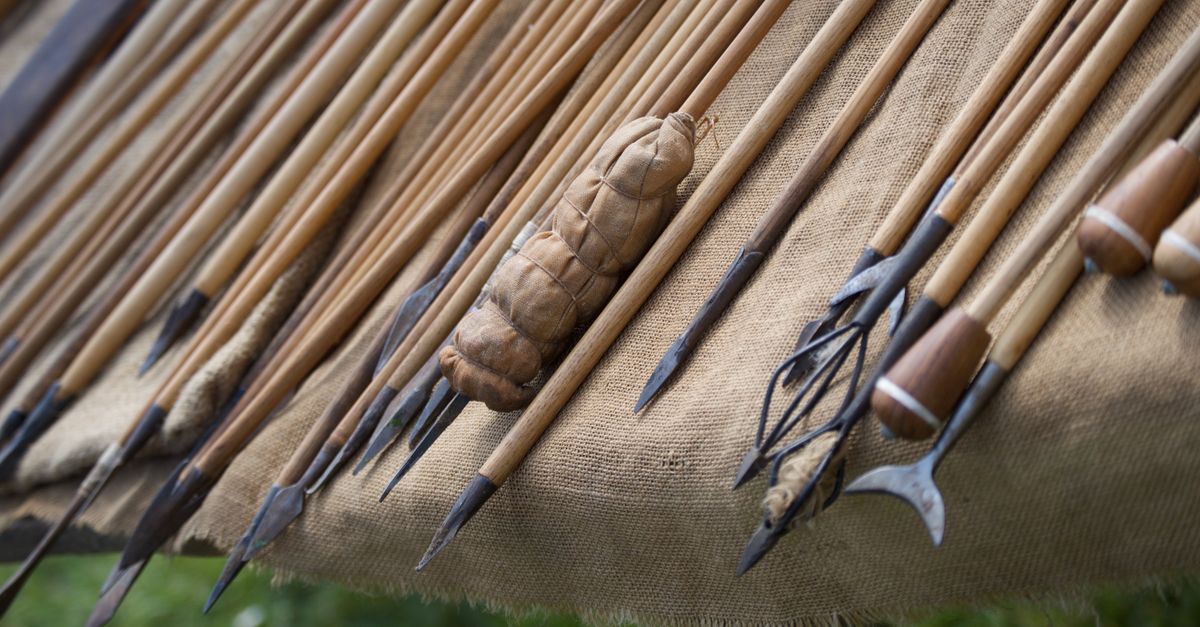
The second centerpiece is flintknapping demonstration. Flintknapping is the craft of shaping stone — flint, chert, obsidian — into tools and points by controlled percussion and pressure. It is one of the oldest technologies in human history, and watching a skilled knapper reduce a raw piece of stone into a finished projectile point in real time communicates something about prehistoric cognition and patience that no museum placard can fully convey. At Haggard Park, visitors can observe this process up close and ask questions of the people doing it.
Beyond the performances and demonstrations, the fair incorporates hands-on activities specifically designed for younger attendees. The goal is tactile engagement rather than passive observation — children are invited to participate rather than simply watch, which is a meaningful distinction for an event aimed at building long-term civic literacy about the region’s deep history.
The location is not incidental. Haggard Park sits in the heart of what most Plano residents recognize as the historic downtown corridor, a few blocks from the ArtCentre of Plano and within walking distance of the older residential and commercial fabric of the city’s original core. Placing an archaeology fair here rather than at a more generic recreational facility reinforces the implicit argument the event makes every year: that the land beneath Plano’s streets has a layered human story that predates the city’s incorporation by thousands of years.
Collin County and the broader Blackland Prairie region of North Texas have a meaningful archaeological record. The area was traversed and inhabited by various Indigenous groups over millennia, and the proximity to creek systems — including Rowlett Creek and its tributaries, which drain through the eastern part of the city — made this land attractive for human settlement long before European contact. The fair exists, in part, to make that record visible and legible to residents who may think of Plano’s history as beginning in the late nineteenth century.
The Plano Conservancy, which is connected to the fair’s organization, has long worked to document and protect the historic and cultural resources of the city. Sustaining a free, public event of this scale for 22 years reflects an institutional commitment to that mission that goes beyond a single annual program.
November 7 is a notably full Saturday in the city. The Plano Food + Wine Festival runs simultaneously at Legacy West from noon to 6 p.m., and the Plano Art & Culture Quest holds its monthly edition at McCall Plaza in downtown from noon to 3 p.m. For families who want to build a full day around the city’s cultural offerings, the Archaeology Fair’s 9 a.m. start time positions it as a natural first stop — the programming wraps at 3 p.m., leaving the afternoon open for other events.
That clustering of activity on a single day speaks to something broader about how Plano has developed its community event calendar. The city now sustains enough overlapping cultural programming that residents can, on a given Saturday, move between a prehistoric history fair, a contemporary art walk, and a food and wine festival without leaving city limits. The Archaeology Fair, having been part of that calendar since the early 2000s, helped establish the expectation that weekends in downtown Plano could carry genuine cultural weight.
Longevity in community programming is harder to achieve than it looks. Events that draw initial enthusiasm often fade after a few years when volunteer energy dissipates, funding shifts, or the organizing infrastructure thins out. The Archaeology Fair has avoided that pattern. Reaching a 22nd iteration means the event has survived multiple cycles of civic leadership, multiple economic downturns, and whatever disruptions the intervening years brought.
That durability suggests the fair has found a stable constituency in Plano — families who return annually, educators who bring students, and enthusiasts of North Texas prehistory who treat it as a reliable fixture in their calendar. It also suggests that the subject matter itself has staying power. The prehistoric record of this region does not become less relevant with time; if anything, each year of development in the Dallas–Fort Worth metroplex makes the material that survives — and the events that interpret it — more rather than less significant.
For residents who have never attended, the 22nd edition is as straightforward an entry point as any. Haggard Park is a familiar downtown green space, the hours are generous, and the programming is explicitly designed to welcome visitors with no prior background in archaeology or Indigenous history. The fair asks only that attendees show up and pay attention.
That is a reasonable ask for a Saturday morning in November.
Restaurant reviews, events, and local news from Plano, delivered weekly.
The week's top local news & events, free in your inbox. No spam — unsubscribe anytime.